
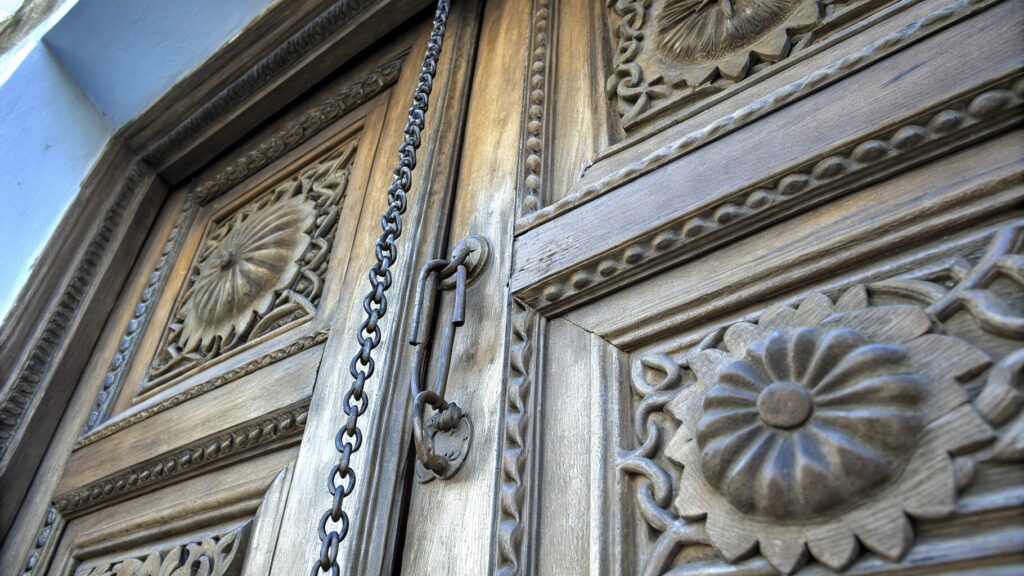
The carved door symbols in Stone Town reveal much more than mere decoration. In fact, these wooden masterpieces reflect cultural identity, religious beliefs, social status, and protection. As you explore Zanzibar’s maze-like alleys, every carved door tells a piece of the island’s complex history.
What Are Stone Town Door Symbols?
Stone Town’s iconic doors originally come from Indian, Omani, and Swahili traditions. Historically, craftsmen handcrafted each door to reflect the owner’s religion, wealth, and societal role. Moreover, a door’s grandeur served as a public statement of pride and prestige.
The Meaning Behind Stone Town Door Symbols
Each carved symbol on these doors conveys specific meanings. For example:
- Lotus flowers symbolize purity and spiritual awakening, inspired by Indian culture.
- Chains represent unity and strength, contrary to the common misconception of slavery symbolism.
- Stars and crescents highlight Islamic beliefs and divine protection.
- Waves and fish indicate Zanzibar’s deep connection to the sea, symbolizing abundance and sustenance.
- Leaves and vines express family growth, lineage, and prosperity.
Therefore, the door owners chose these symbols carefully to reflect their personal or family values.
How Carvings Serve as Spiritual Protection
Besides displaying status, people believed doors could protect homes. They carved symbols such as the “evil eye” or geometric patterns to shield households from jealousy, misfortune, or spiritual harm. Thus, doors acted as both artistic and spiritual guardians.
Doors Reflect Social Status
Wealth and importance reflected in a door’s width, height, and carving complexity. Typically, wealthier families commissioned intricate designs that combined Arabic calligraphy, Indian symmetry, and Swahili symbolism. Consequently, visitors often judged power and influence by a door’s ornateness.
The Importance of Symbol Placement
Symbol positioning carried meaning as well. For instance, craftsmen placed religious or protective imagery in the upper sections, while the lower panels displayed personal or family identity. This vertical storytelling revealed layers of cultural significance—from spiritual to social.
What Visitors Often Overlook
Many tourists admire the doors simply for their beauty. However, few understand the rich layers beneath each carving. By hiring a local guide or visiting the heritage museum, you can greatly enhance your appreciation of this wooden language.
How to Respectfully View and Photograph the Doors
Travelers can observe and photograph the doors, but should do so respectfully. Since many still function as entrances, avoid blocking pathways or intruding on private property. Therefore, visiting during daylight and joining guided walking tours provides deeper insights and respectful access.
Final Thoughts: Every Stone Town Door Tells a Story
The Stone Town carved door symbols stand as living testimonies to Zanzibar’s multicultural past. Beyond elegance, these doors narrate spiritual, cultural, and personal stories from generations. Next time you wander through Stone Town, pause and look closely—because each carving carries meaning waiting to be discovered.